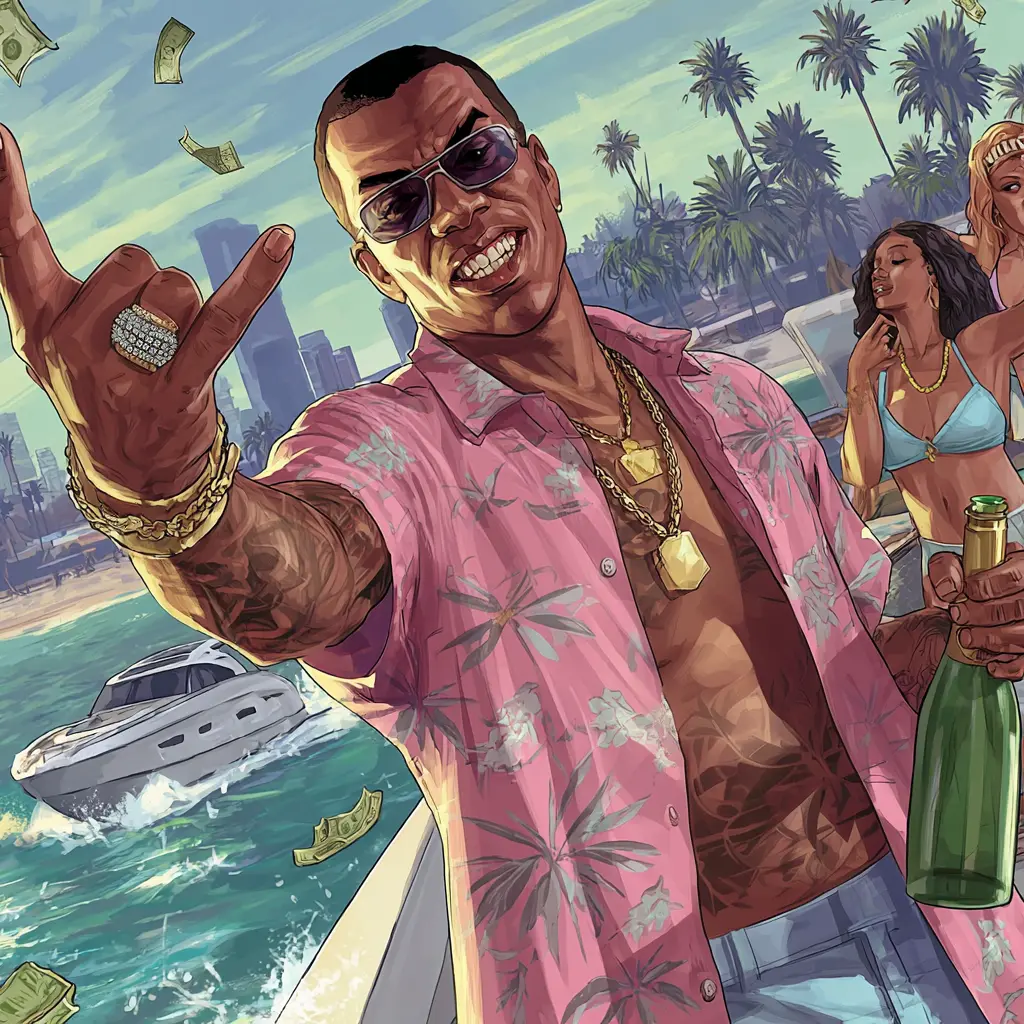
There’s a familiar blend of dread and excitement whenever a new Grand Theft Auto rumor starts circulating. Forums combust, streamers sharpen their takes, and communities split between “this will change everything” and “this will kill GTA V.” That last claim—will GTA 6 kill GTA V?—is less about polygons and more about culture, money, and human habits. Before we get into scenarios and predictions, a quick baseline: Rockstar has set a hard date for the sequel—GTA 6 launches on November 19, 2026—and it centers on two protagonists, Jason Duval and Lucia Caminos. With that in mind, here’s a clear-eyed breakdown of what “kill” actually could mean, how likely it is, and what players, creators, and Rockstar should do to avoid a destructive transition.
What we’re really arguing about
When people ask whether GTA 6 will “kill” GTA V, they’re rarely asking if the code will vanish. The real worry is social and economic: will the communities, identity, and revenue stream built around GTA Online evaporate once attention flips to the new title? GTA Online is not just a multiplayer add-on; it’s an ecosystem where players have invested time, money, and identity. That investment fuels behaviors and rituals that don’t simply disappear with a new product. So the question becomes: will GTA 6 draw all that energy away, or can both worlds coexist?
Why GTA Online won’t die overnight
There are practical and cultural reasons GTA Online will persist long after GTA 6 arrives.
- Ongoing revenue and business momentum. GTA Online is a reliable money generator—microtransactions, cosmetic drops, and continual updates have turned GTA V into an unprecedented long-tail success. Companies rarely kill a steady revenue stream overnight when continuing it is cheaper than rebuilding that cash flow elsewhere.
- Social architecture and rituals. For many players, GTA Online is a space for recurring rituals: Sunday car meets, monthly roleplay arcs, coordinated heists with the same friend group. Those rituals anchor communities and resist abrupt migration.
- Content creators and audiences. Streamers and YouTubers built careers around the unpredictability and spectacle of GTA Online. Their audiences come to watch those emergent moments: botched heists, roleplay drama, and weird community events. Creators are an inertia force; they can keep an older title culturally relevant by creating content that audiences still want.
- Modding and unofficial servers. The mod scene and community-hosted servers have extended GTA V’s life in ways Rockstar can’t fully control. Roleplay servers, in particular, create bespoke social platforms that replicate and evolve the original experience. As long as tools and server ecosystems persist, communities can keep the game alive independently.
Those forces make a sudden shutdown unlikely. That doesn’t mean GTA Online won’t change—but change is more likely to be gradual than terminal.
Three plausible futures (and what they mean)
Think of the outcome as a spectrum rather than a single event. Based on business incentives and community dynamics, three scenarios stand out.
1) Coexistence: Parallel lives
Rockstar supports GTA 6 and keeps GTA Online running as an active, if possibly reduced, live service. Both games receive updates, cross-promotions happen, and communities pick their preferred homes.
Why this is likely: It’s the most revenue-smart and PR-safe choice. Letting both products breathe maintains goodwill and keeps two income streams open.
Player impact: Many players will split time between the two. Roleplayers and long-term crews will remain on V; streamers will sample both. Events on either side can feed interest in the other.
2) Slow eclipse: Gradual attrition
Rockstar directs the majority of new development and marketing toward GTA 6. GTA Online receives fewer major updates, smaller content drops, and ultimately drifts into maintenance mode. Player counts decline over time.
Why it could happen: When resources are finite and the new title promises higher lifetime value, companies reallocate accordingly. That’s standard prioritization—useful, but painful for those left behind.
Player impact: Communities erode more slowly. Some players will migrate by necessity (friends move), others will cling on. Unofficial servers and modders will pick up the slack for those unwilling to move.
3) Consolidation attempt: Merge or migrate
Rockstar attempts to reward legacy players with transfers—cosmetics, badges, maybe limited cross-account perks—or even a partial merge of economies and social hubs to ease the transition.
Why this tempts devs: It’s a player-friendly narrative and excellent PR. It also smooths adoption since players feel their investment is validated.
Why it’s risky: Technical complexity, balance issues, and legal/regulatory constraints make deep transfers dangerous. Cosmetic handovers are manageable; currency and power carry-through would warp the new game’s economy.
Of these, coexistence is the safest bet. Consolidation is the dream for players but the technical headache for developers. Eclipse is the cynical but plausible path if Rockstar chooses to prioritize the sequel overwhelmingly.
What GTA 6 must avoid to protect the ecosystem
If Rockstar wants to launch GTA 6 without killing GTA V’s social life, several strategic choices matter.
- Avoid heavy pay-to-win mechanics. If GTA 6’s live service model rewards purchase over play, it risks alienating competitive and social players. Players resent transactions that shortcut earned status; that resentment can spill back to GTA Online and harm trust.
- Ship strong creator tools from day one. The communities that sustained GTA V grew because players could create content and narratives. If GTA 6 launches with rich creator suites, mod support for single-player, and early support for streamers, it will cultivate a new generation of community-driven content without pillaging V.
- Offer meaningful, earned continuity—not wholesale transfers. Cosmetic nods, legacy titles, or limited-time events that celebrate GTA V are valuable. Transfers that unbalance the new game’s economy (currency, power items) are not. Reward loyalty in ways that honor history without breaking game balance.
- Communicate transparently. Players want to know timelines and intentions. A clear plan for GTA Online’s support window, alongside details about GTA 6’s online model, reduces suspicion. Ambiguity fuels conspiracy and anger.
Human factors that preserve older games
Beyond business and tech, games survive because of people.
- Rituals outlast content. Game features are ingredients; rituals turn them into social glue. Those who meet weekly for races or roleplay will keep doing so, often regardless of patch notes.
- Identity and reputation matter. Your online persona—the voice on the mic, the character choices, the infamous heist failure—creates social ties. People follow people more easily than they follow new IPs.
- Storytelling multiplies value. The best single-player stories are authored by studios; the best long-lived multiplayer stories are co-authored by players. That co-authorship is hard to migrate wholesale.
Role of modding and unofficial servers
Community-driven projects are a major reason GTA V remained culturally relevant. Roleplay servers, mod frameworks, and creative modes let players reforge the game as a social platform tailored to their tastes. Even if Rockstar tightens enforcement, a robust modding scene will find workarounds, and players will follow the communities they value.
That said, unofficial ecosystems can conflict with official business models. Publishers must weigh IP protection against the cultural value of a thriving community. Historically, tolerance has been the common approach when community servers provide publicity and continued player engagement without directly undermining revenue.
Practical advice for players and creators
If you’re deciding where to invest time and money when GTA 6 arrives, here are pragmatic moves to avoid buyer’s remorse.
For players
- Play what feeds your friendships. If your core group is in GTA Online, that social fabric is a major factor; keep it. You won’t lose anything by sampling the sequel, but don’t abandon your crew for the sake of novelty.
- Document sentimental assets. Screenshots, clips, voice-chat highlights—archive the moments you care about. Digital possessions live while servers do; memories don’t require a persistent instance.
- Budget your spending. With two live services in play, prioritize purchases that serve social experiences (cosmetics your friends notice) rather than speculative items that won’t transfer.
For creators
- Diversify platforms and formats. Don’t rely on a single title for income. Build adaptable content: long-form series, IRL collaborations, and multi-game roles that preserve audience across transitions.
- Invest in community tools. Host events, create mods, or produce narrative arcs that bridge both games. Creators who help communities migrate gracefully will be rewarded with loyal viewers.
- Secure ownership of key IP. Control your own clips, edits, and assets so you can reuse them across titles without licensing headaches.
For roleplay server admins and modders
- Plan for portability. If you have a thriving server, develop migration strategies or mirrored communities across engine versions. Document rules, lore, and roles so players can reassemble elsewhere if needed.
- Engage with legal boundaries. Maintain transparency about what you mod and avoid monetization models that trigger legal pushback. Cultural relevance is best sustained by a reputation for stability and fairness.
How Rockstar’s choices will shape the narrative
Rockstar’s decisions will ultimately define whether the community sees GTA 6 as a sequel that coexists or a successor that replaces.
- Prioritize quality without burning legacy bridges. If Rockstar gives GTA Online a clear roadmap—say, a maintenance plan with occasional nostalgia drops—while committing major resources to GTA 6, players can prepare emotionally and logistically.
- Make continuity symbolic, not monetary. Cosmetic callbacks, legacy achievements, and exclusive but balanced events will reward loyalty without undermining GTA 6’s economy.
- Be surgical about transfers. If Rockstar offers any migration, limit it to cosmetics, badges, and earned titles. Anything that confers in-game power or unearned currency risks souring the player base.
- Support the creator ecosystem. Early access to modding tools, creator modes, and a transparent roadmap for content creators will seed GTA 6’s culture in a healthier way than a scorched-earth approach.
Common myths to put to rest
There are a few persistent misconceptions that deserve quick debunking.
- Myth: “New is always better; existing communities will vanish.” Not true. Familiarity and social ties often outweigh novelty. New games attract interest, but established social ecosystems are sticky.
- Myth: “Rockstar will sacrifice community for short-term profit.” Corporations can be ruthless, but killing a long-term revenue stream and alienating a massive fan base is rarely the smartest path. Expect tempered transitions rather than abrupt shutdowns.
- Myth: “GTA Online is immortal.” No live service lasts forever. It can be long-lived, but its prominence will ebb and flow depending on developer priorities and player behavior.
Five- and ten-year outlooks
In five years, GTA 6 will be settling into its own rhythm. If Rockstar plays this transition thoughtfully, both games will coexist: GTA 6 will claim the mainstream spotlight, while a loyal subset will keep GTA Online vibrant for roleplay, nostalgia, and established rituals. Mod communities may even create bridges—custom servers that replicate favorite V-era experiences on new tech.
Ten years out, both titles could be cultural artifacts. GTA V may be revisited like a classic TV show—sometimes binged for nostalgia, sometimes patched by talented modders for fresh spins. GTA 6, if managed well, will have its own legacy, with players and creators who forged identities early on. The real loss would be if the transition burned community trust and left a singular feeling of abandonment.
Concrete steps that would make me optimistic
If I were advising Rockstar on how to handle the handoff, here’s what I’d recommend—and why it would reduce the risk of “killing” GTA V.
- Publish a clear support timeline for GTA Online, including a commitment to regular nostalgia-driven events for a set period post-launch. Clarity calms players and allows them to plan.
- Offer cosmetic legacy packs that are earned through play in GTA Online and unlock in GTA 6 as non-tradable vanity items. That rewards loyalty without breaking balance.
- Release robust creator and mod tools early for GTA 6 and provide official channels to showcase creator work. That accelerates community culture without siphoning everything from V.
- Fund third-party community initiatives that celebrate both titles—tournaments, content grants, or official spotlights—so creators feel supported across the transition.
- Avoid currency transfers. If players are going to be rewarded, make it for time and storytelling, not purchasable shortcuts.
Closing thought
Will GTA 6 kill GTA V? Not in the dramatic, binary way trolls suggest. The franchise’s future will be messy in the best way—social rituals, creators, modders, and corporate strategy will all collide. GTA Online won’t be suddenly extinguished on November 19, 2026. What will shift is cultural gravity: attention will tilt toward Jason Duval and Lucia Caminos’ new world, and Rockstar will have to decide whether to shepherd two ecosystems or to nudge players toward a single, consolidated future.
For players: keep the rituals and friendships that matter. For creators: hedge your bets and build tools and content that travel. For Rockstar: respect the human fabric that made GTA Online more than a service. Treating players as active partners rather than placeholders is the clearest path to a future where both games thrive. That way, the series doesn’t win by killing its past—it grows by honoring it.